How to Install OnStream For PC (Windows & Mac) 2026 Guide
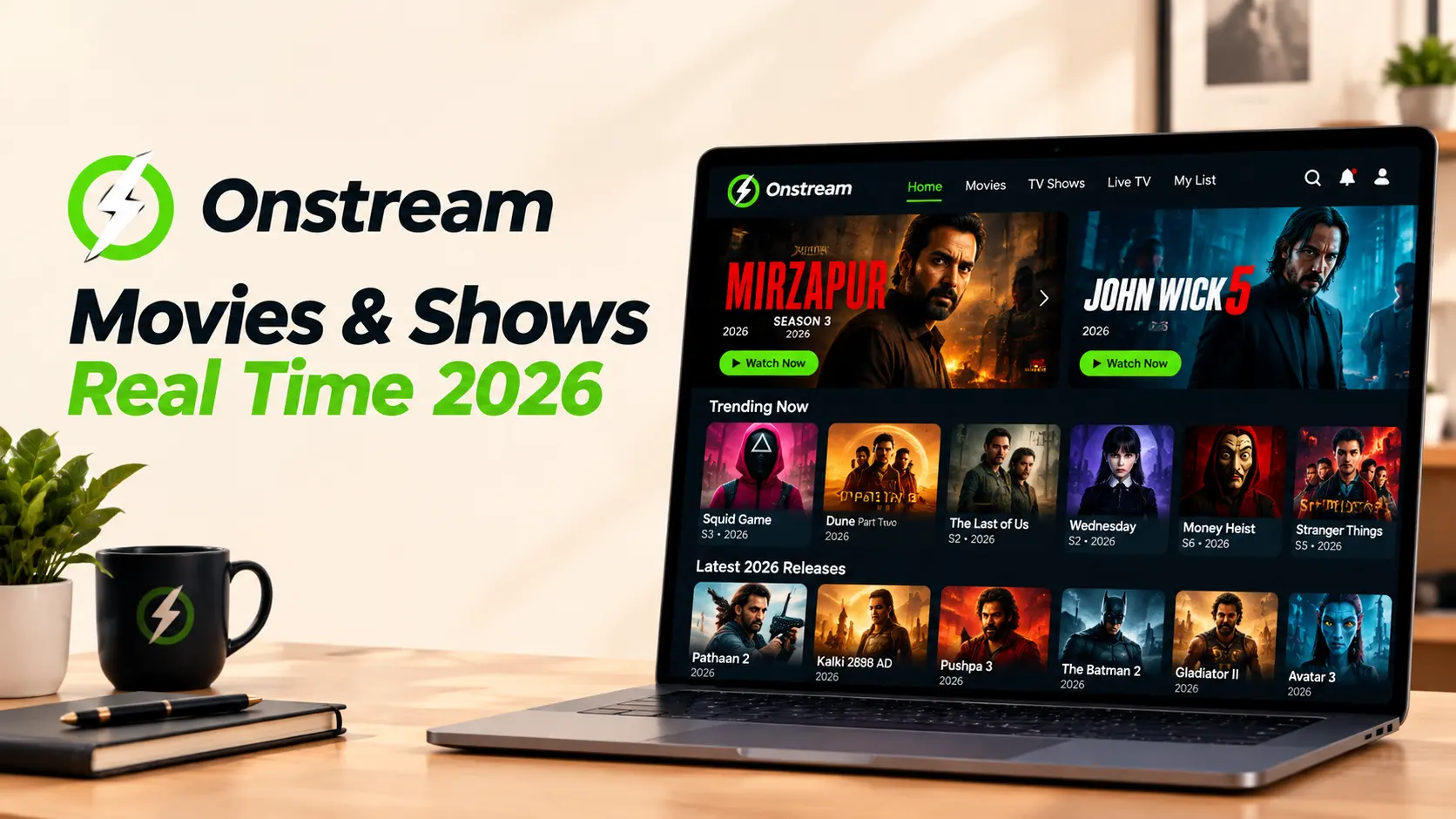
Enjoy your favorite movies, TV shows, and live channels on a bigger screen. Make sure you have the rights to stream any content available in your region through this app.
~10 min setup
No Sign-Up
1080p Quality
Windows and Mac
Smooth Streaming
Enjoy HD and Full HD quality with stable performance.
Bigger screen experience
Watch movies, TV shows, and live channels on PC or Mac.
No Sign-up Needed
Open the app and start watching instantly.
Safe and Simple
Use a trusted Emulator and scan your APK before installing
OnStream is built exclusively for Android; there’s no official .exe file for Windows or .dmg file for Mac. Any site claiming a direct “OnStream PC download” is either describing the emulator method below or offering something unrelated to the real app. This guide covers the real process: running the Android version of OnStream inside a Windows or Mac emulator, exactly as we tested it ourselves.
We installed OnStream for PC through two different emulators on both a Windows 11 laptop and an Apple Silicon Mac, timed the setup from a blank desktop to a playing video, and noted every step that tripped us up along the way. If you’ve already followed our Android installation guide, this process will feel familiar; the emulator is simply standing in for your phone.
OnStream on PC at a Glance
| OnStream PC Details | Information |
|---|---|
| App Name | OnStream |
| Platform | Windows 10/11 & macOS 11+ (via Android Emu) |
| Category | Entertainment & Streaming |
| Latest Version | 1.2.0 |
| File Size | 19.7 MB |
| Operating System | Windows 10 / 11 |
| Content Type | Movies, TV Shows & Entertainment |
| Interface | PC-Friendly Interface |
| License | Free |
| Price | $0 |
| User Experience | Optimized for large-screen streaming |
Quick Answer:
OnStream has no native Windows or Mac app, so you run it through a free Android emulator such as BlueStacks or LDPlayer. The emulator creates a virtual Android device on your computer, and you install the same OnStream APK you would use on a phone. Setup takes about ten minutes the first time.
Why Watch OnStream on PC?
A bigger screen is the most obvious reason to move OnStream from your phone to your PC, but it isn’t the only one. Running the app through an emulator keeps it off your phone’s battery and storage, which matters if you’re already tight on space or plan to watch for long stretches.
Typing in the search bar with a physical keyboard is also noticeably faster than tapping out a title on a phone screen, and if you’re already sitting at a desk, switching to a browser-sized window is simpler than picking up a second device.
The trade-off is setup time. Installing OnStream directly on Android takes under a minute once you download the APK. Setting it up on PC for the first time takes closer to ten minutes, mostly spent waiting for the emulator itself to download and complete its own first-time setup. After that initial setup, opening OnStream is just as fast as it is on a phone.
What Changes When You Use OnStream for PC?
Here are a few key features worth knowing about before you install:
Larger Screen Playback (HD)
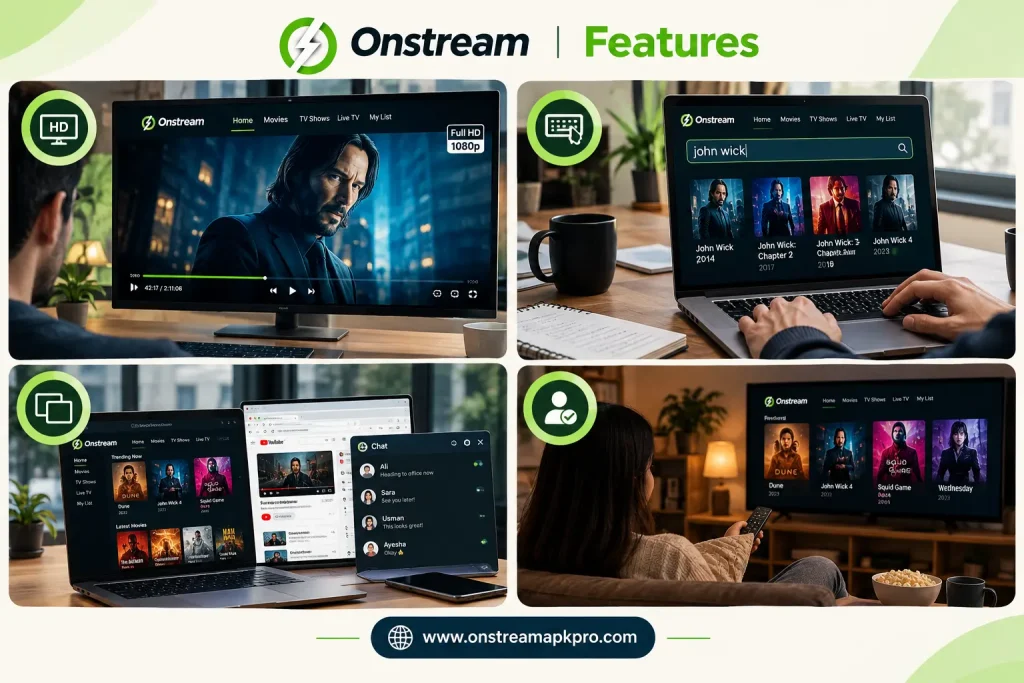
Watching on PC means the emulator window can be expanded to fill your entire monitor, giving OnStream’s HD and Full HD streams noticeably more visual impact than a phone screen allows. In our testing, scaling the BlueStacks window to full screen didn’t introduce any extra buffering, and text and subtitles stayed sharp even at larger sizes.
Keyboard & Mouse Controls
Every part of OnStream that normally needs a tap works with a simple mouse click instead, and the search bar accepts regular keyboard typing rather than a touch keyboard. This alone made browsing the library and typing out a specific title noticeably faster during our tests compared to doing the same thing on a phone.
Emulator Compatibility
Because the emulator runs as a normal window rather than taking over the whole screen, OnStream for PC can sit alongside a browser, a chat app, or a document without needing to switch between full-screen apps. We kept it running in a corner of the screen during work breaks without any noticeable slowdown to either program.
Same Library, No Separate Sign-In
The PC version isn’t a stripped-down copy of the app; it’s the same OnStream APK running inside the emulator, so the full movie and TV library, live channels, and search filters are all present. There’s no separate PC account to create either, matching the no-login approach of the Android version.
Better Audio Through PC Speakers
Streaming through a PC naturally routes audio through your computer’s speakers or a connected headset, which tends to sound fuller than a phone’s built-in speaker for movies and shows with wider audio mixes. Nothing needs to be configured for this; BlueStacks and LDPlayer both handle audio output automatically.
The main reason to download OnStream for PC is the larger display and the convenience of desktop hardware. However, the experience depends heavily on the emulator, available RAM, CPU resources, graphics configuration, and the performance of the PC itself. An emulator also adds another software layer between Windows or macOS and the Android application.
Can You Run OnStream on Windows 11 Without an Emulator?
Not officially, because the built-in Android option for Windows 11 is no longer supported.
For a while, Windows 11 had its own way of running Android apps, called Windows Subsystem for Android. Microsoft ended support for it, along with the Amazon Appstore that came with it, on March 5, 2025. That leaves a third-party emulator such as BlueStacks or LDPlayer as the practical route today.
Not Sure Which Mac You Have?
Knowing whether your Mac uses Apple silicon or an Intel chip helps you download the right emulator version.
Click the Apple menu, choose About This Mac, and read one line. If it says Chip followed by an M-series name, you have an Apple silicon Mac. If it says Processor followed by an Intel name, you have an Intel Mac. Apple lists which Mac models use Apple silicon on its support page.
Does OnStream Have a Native PC Version?
No native Windows or macOS desktop application is currently documented for OnStream for PC. On a PC, the practical approach is to run the Android application inside a compatible Android environment.
This distinction is important: installing OnStream through an emulator is not the same as installing a traditional Windows program. The emulator creates an Android environment on your computer, and the OnStream APK runs inside that environment.
For Windows users, Android emulators such as BlueStacks or LDPlayer can provide this type of environment. Mac users should check whether their chosen emulator supports their specific macOS version and Mac hardware before installation.
What You Need Before Installing OnStream on PC
Before starting the installation process of OnStream for PC, make sure you have:
System Requirements to Download OnStream for PC
|
Requirement |
Details |
|
Operating System |
Windows 10/11 (64-bit) or macOS 11 and up |
|
RAM |
4 GB minimum, 8 GB recommended (More memory for smoother multitasking) |
|
Storage |
5 GB free space (emulator + app) |
|
Processor |
Any CPU from the last 6 years with virtualization support |
|
Internet |
Required for setup and streaming |
BlueStacks vs LDPlayer
Both emulators can run OnStream on Windows, but they differ in Mac support, setup time, and how light they feel on modest hardware.
|
Feature |
BlueStacks |
LDPlayer |
|
Windows support |
Yes |
Yes |
|
Mac support |
A Mac version exists. Check the current macOS and chip support on its site. |
Windows only |
|
Cost |
Free to download. Watch for bundled offers during setup. |
Free |
|
Our setup time |
About 10–15 minutes |
About 7–10 minutes |
|
RAM used while streaming |
Around 1.5–2.5 GB |
Around 1.2–2.0 GB |
|
Best for |
Mac users and first-time users |
Keyboard + mouse possible |
How to Install OnStream on Windows Using BlueStacks
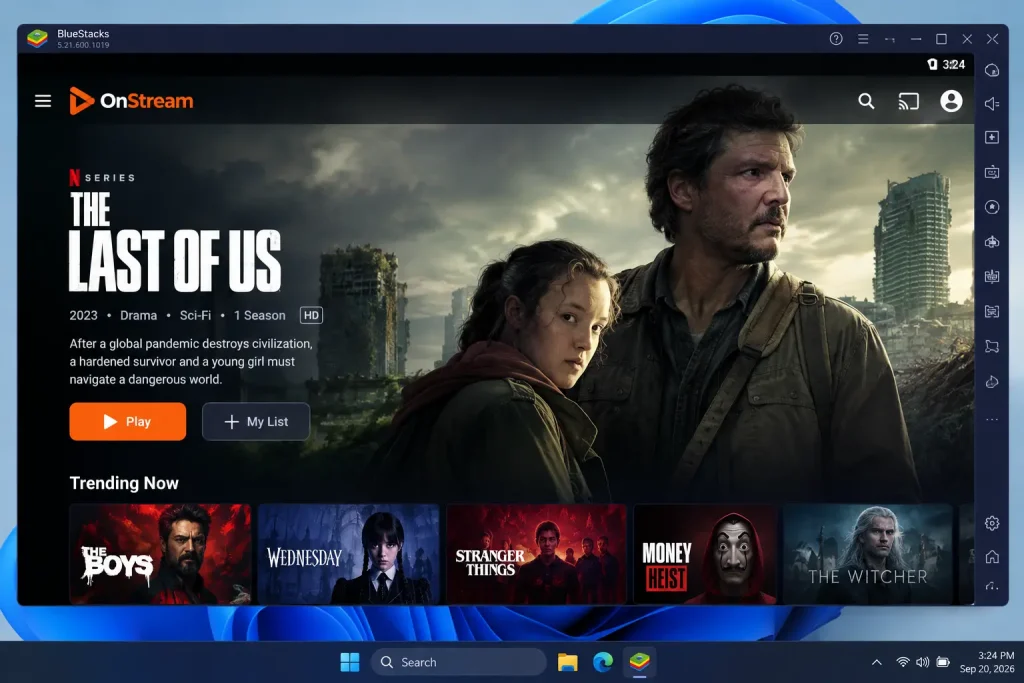
BlueStacks creates an Android environment inside Windows, allowing you to install and run compatible Android applications without installing them as native Windows programs. Before starting, download the emulator from its official website and make sure your PC meets its current requirements. The exact interface and settings can vary between BlueStacks versions.
Step1: Install BlueStacks
Download and install BlueStacks from its official site, then let it finish its first-time setup. This can take a few minutes on the first run, since it’s essentially installing a full Android system.
Step 2: Complete the Initial Android Setup
Open BlueStacks and sign in with a Google account. This is a BlueStacks requirement for accessing its own app store, not something OnStream itself ever asks for. OnStream still opens without any login once it’s installed.
Step 3: Install the OnStream APK
Download the OnStream APK file to your PC using the same download link as our OnStream Android installation guide.
Step 4: Install the APK in BlueStacks
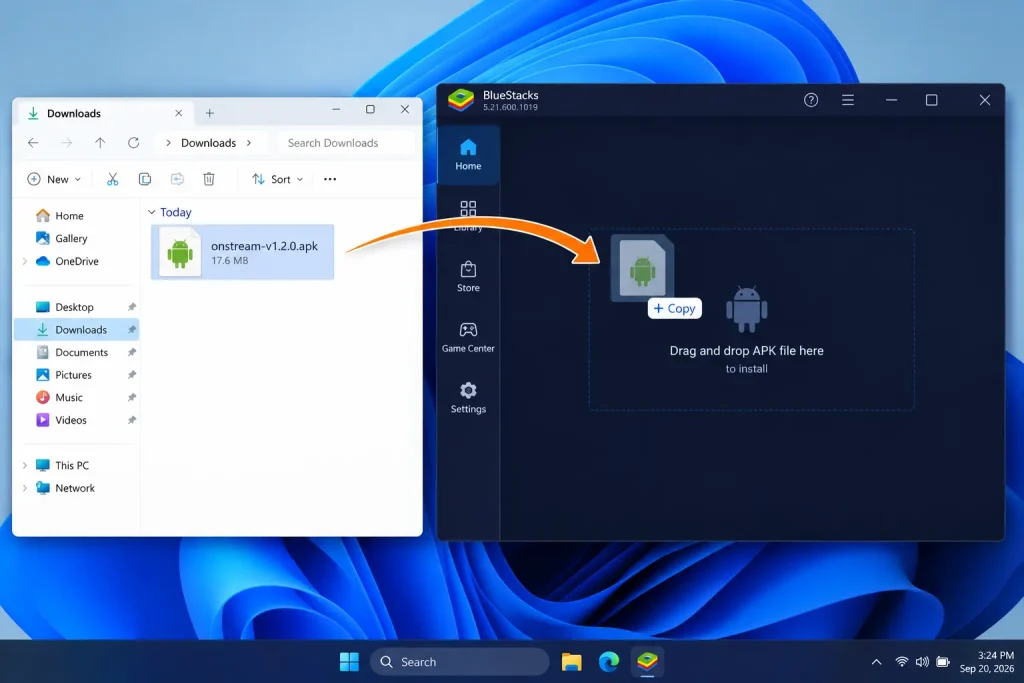
Drag and drop the APK file directly into the open BlueStacks window. Alternatively, use BlueStacks’ built-in file manager or settings menu and its “Install APK” option, then browse to where you saved the file.
Step5: Wait for the installation to complete
Wait for BlueStacks to finish installing and setting up its Android environment. The process can take several minutes depending on your PC and internet speed. Keep the emulator open until the Android home screen appears.
Step 6: Open OnStream in BlueStacks
Once the APK installation is complete, open BlueStacks and find OnStream on the Android home screen or in the installed apps list. Click the OnStream icon to launch the application.
Step 7: Complete the Initial OnStream Setup
After OnStream opens, allow the application to complete its initial loading process. Browse the available sections and check that navigation, playback, and other basic functions work correctly in the emulator. If the app asks for permissions, review each request before allowing access.
How to Install OnStream on Windows Using LDPlayer
LDPlayer is another Android emulator option for Windows. Its interface and available settings can change with new releases, so use the current version of the emulator when following these steps. The basic process is similar to other Android emulators: install the emulator, complete its Android setup, install the OnStream APK, and then launch the application from the emulator.
Step 1: Download and Install LDPlayer
Download the current compatible version of LDPlayer from its official website and install it on your Windows PC. Launch LDPlayer after installation and allow its initial Android environment to finish loading.
Step 2: Download the OnStream APK
Download the OnStream APK to a location on your PC that is easy to find, such as your Downloads folder. Before installing it, make sure the APK comes from a source you can verify.
Step3: Install the OnStream APK in LDPlayer
Open LDPlayer and drag the downloaded APK file into the emulator window. Depending on your LDPlayer version, you may also have an APK installation option in the emulator interface. Wait for the installation to complete before continuing.
Step4: Open OnStream in LDPlayer
After the APK has been installed, locate the OnStream icon on the LDPlayer home screen or in its app list. Select the icon to launch OnStream.
Step5: Complete the Initial Setup and Test Playback
Once OnStream opens, allow it to finish loading and browse or search for available content. Start a video to confirm that the application, internet connection, audio, and playback are working correctly inside LDPlayer.
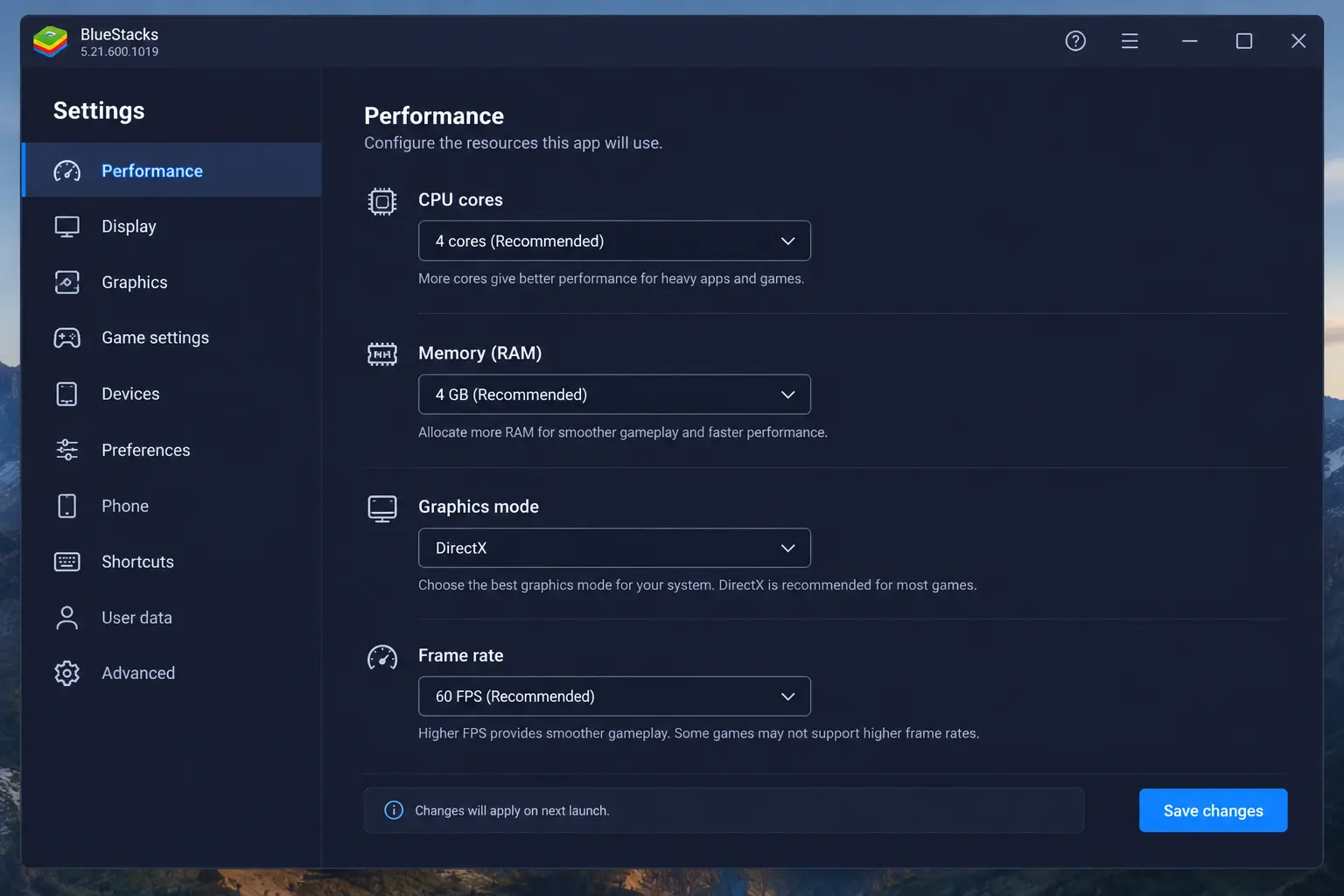
Emulator Settings That Help Performance
A few settings inside the emulator decide whether OnStream feels smooth or laggy, and they are worth checking before you look for other fixes.
|
Setting |
What it does |
Starting point |
|
CPU cores |
Gives the emulator more processing power |
2 to 4 cores, fewer if your PC struggles |
|
Memory (RAM) |
Lets the emulator keep more data ready |
2 to 4 GB, and only if your PC has RAM to spare |
|
Graphics mode |
Changes how video is drawn |
Try the default first, then switch modes if you see a black screen |
|
Resolution |
Sets the size of the Android screen |
Start at 720p and raise it if playback stays smooth |
Pros and Cons of OnStream for PC

OnStream for PC vs Android: What’s Different?
A quick side-by-side, since the two experiences aren’t identical:
|
Feature |
On Android |
On PC (Emulator) |
|
Setup time |
Under 1 minute |
Under 10 minutes (first time) |
|
Extra software needed |
None |
Emulator required |
|
Battery/storage used |
Phone’s own |
PC’s own, phone untouched |
|
Screen size |
Phone display |
Full monitor |
|
Sign-in required |
No |
Emulator may ask, OnStream itself doesn’t |
|
Controls |
Touch controls |
Keyboard + mouse possible |
|
Performance |
Depends on phone hardware |
Depends on PC + emulator |
How to Run OnStream on Mac
Mac installation is different from Windows because emulator availability depends on the macOS version, Mac hardware, and whether the computer uses Intel or Apple silicon.
Intel Mac
If your Intel Mac is supported by the Android emulator you choose, install the current compatible emulator and then use the same general APK installation process described above.
Apple Silicon Mac
For M-series Macs, check the emulator’s current compatibility information before installation. Android emulation can behave differently on Apple Silicon than on Intel hardware, so confirm compatibility for the specific emulator version you plan to use.
Mac Installation Tip
Do not download a random DMG or EXE file advertised as an “official OnStream for PC installer.” If you are using the Android APK, the APK should be installed inside a compatible Android environment rather than treated as a native macOS application.
How to Improve OnStream Performance on PC
Close other heavy programs, browsers with many tabs, and video editors before opening the emulator, since it shares your PC’s RAM. If the emulator runs unusually slowly, virtualization being off is the most common cause; see the section below to check it.
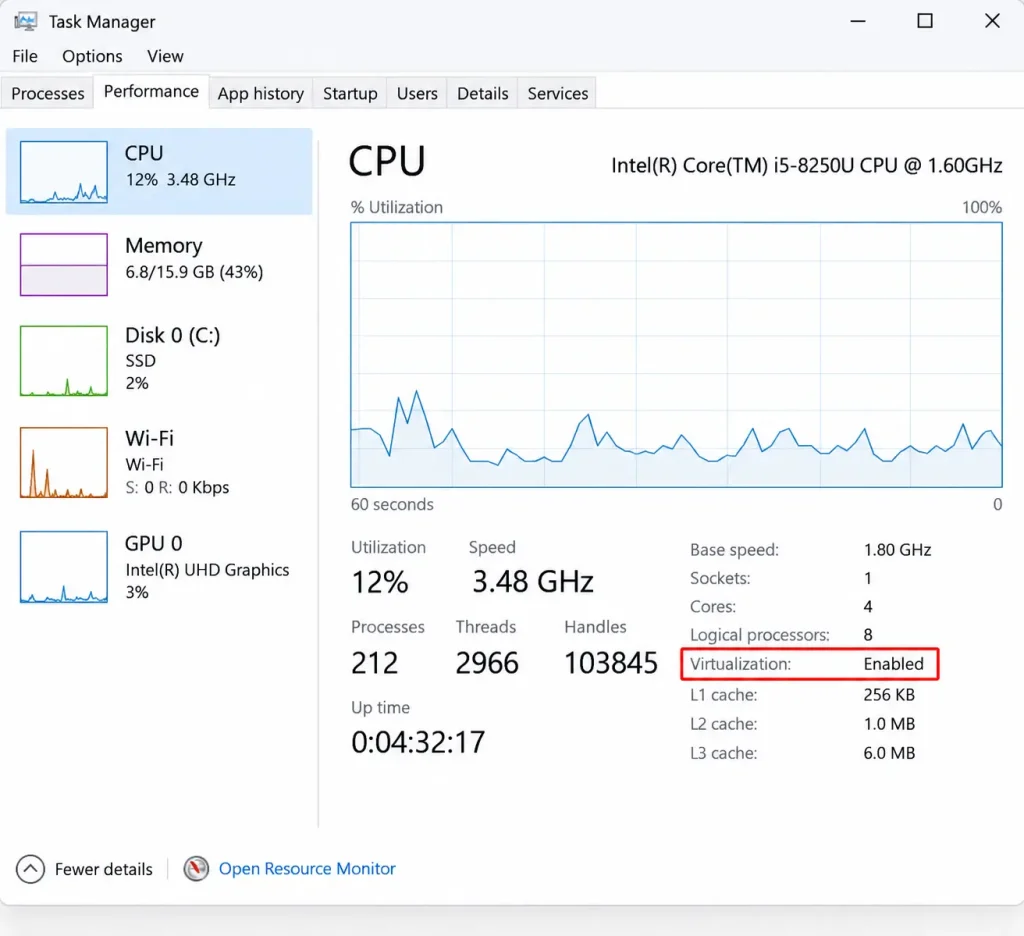
How to Check if Virtualization Is Turned On
Virtualization is the processor feature that lets an emulator run Android smoothly, and switching it on is one of the most common fixes for a slow or crashing emulator.
Before you blame the emulator, take thirty seconds to check this. On Windows, press Ctrl + Shift + Esc to open Task Manager, click the Performance tab, and select CPU. Look for the word Virtualization near the bottom right. If it says Enabled, you are good to go.
If it says Disabled, you will need to turn it on in your PC’s UEFI (BIOS) settings. The option is usually called Intel VT-x (Intel Virtualization Technology) or AMD-V, depending on your processor. The menus look different on every brand, so follow Microsoft’s official guide to enable virtualization. Many PCs already have it enabled, so don’t be surprised if there is nothing to change.
Common OnStream for PC Installation Problems and Fixes
Issues
The emulator runs slowly or lags.
The APK won’t install by drag-and-drop.
OnStream opens, but video won’t play.
The emulator asks for a Google sign-in, and it feels unnecessary.
The emulator says virtualization is disabled.
OnStream opens to a black screen.
There is no sound.
The video buffers even though your internet is fast.
Solution
Close background programs, and confirm virtualization (VT-x on Intel, AMD-V on AMD) is enabled in your BIOS.
Use the emulator’s manual “Install APK” option instead, usually in its settings or file manager.
Switch servers inside the player; the same fix that works on Android.
That’s standard for the emulator’s own app store, not something OnStream requires; you can skip it and still use OnStream normally.
Turn on Intel VT-x or AMD-V in your UEFI (BIOS). See the virtualization section above.
Switch the emulator’s graphics mode, update your graphics driver, then restart the emulator.
Check the volume inside the emulator and make sure Windows is using the right output device.
Give the emulator more RAM, close other programs, lower the emulator resolution, or switch the server inside the player.
Is It Safe to Run OnStream For PC? (Safety Checklist)
A few quick checks before installing any APK on your computer can prevent most problems.
Running an Android APK through an emulator does not automatically make the APK safe. The security of the setup depends partly on where the APK came from and what permissions or behavior the application has. Before installing an APK, verify its source and avoid modified files from unknown websites.
Keep Windows security protections enabled, scan suspicious files, and do not enter sensitive account information into an application you do not trust. An emulator provides an Android environment; it should not be treated as a guarantee that every APK installed inside it is harmless. If your PC starts behaving strangely afterwards, the FTC’s guide on how to recognize, remove and avoid malware explains what to do next.
Frequently Asked Questions
Do I need BlueStacks specifically?
No. Any well-reviewed Android emulator works; BlueStacks and LDPlayer are simply the two we tested directly.
Is there an official OnStream app for Windows or Mac?
No. It’s an Android app, so an emulator is currently the only way to run it on a computer.
Does OnStream run on Mac?
Yes, through the same emulator method. We tested BlueStacks on an Apple Silicon Mac without issues.
Will I need to sign in to use it?
Only the emulator itself may ask for a Google account, which is standard for any Android emulator. OnStream inside it still requires no account or sign-up.
Which emulator uses fewer PC resources?
LDPlayer ran a little lighter in our testing, though the difference was modest on a reasonably modern PC.
Does OnStream for PC need a Google account?
In our tests, OnStream itself did not ask for an account. The emulator may ask you to sign in to Google for its Play Store, which is a separate step.
Can I use an older OnStream version in an emulator?
Yes, and it can help if the latest build crashes on your emulator’s Android version. Read our guide to the OnStream APK old version for how to choose one safely.
Does OnStream work on Windows 10 and Windows 11?
It runs inside an emulator, so what matters is whether the emulator supports your Windows version. Check the emulator’s requirements on its official site, and confirm you have virtualization turned on.
Is it legal to use an Android emulator?
Emulators are ordinary software, and using one is generally fine. What matters is where you get the app and whether you have the right to stream the content in your region. This is general information, not legal advice.
Final Verdict
Running OnStream for PC isn’t complicated, but it does add one extra piece of software into the mix that the Android version doesn’t need. If you’re already comfortable installing an emulator, or you specifically want OnStream on a larger screen without touching your phone, the process above gets you there in about ten minutes with either BlueStacks or LDPlayer. For anyone who mainly wants convenience over screen size, the direct Android install remains faster and simpler. For those who want a TV option, check our OnStream Firestick guide for more details.
How We Tested This Guide
Written by Ryan Walker, who has been testing Android apps on desktop emulators for the past few years. This guide is based on installing OnStream through BlueStacks and LDPlayer on both a Windows 11 laptop and an Apple Silicon Mac.
We timed each setup from download to first playback, tested drag-and-drop and manual APK installation methods, and checked streaming performance and search responsiveness inside each emulator. This page is updated whenever a new emulator version changes the installation steps.